Next.js 16 and React 19: What Actually Matters in 2026
Next.js 16 shipped with React 19, and the ecosystem has matured significantly. Here is what actually matters if you are building production apps today.
React Server Components Are the Default Now
This is no longer experimental. Every component in the App Router is a Server Component by default. The mental model is simple:
- Server Components run on the server, have zero client-side JavaScript, and can directly access databases, file systems, and APIs
- Client Components (marked with
"use client") run in the browser and handle interactivity — state, effects, event handlers
// This runs on the server — no JS shipped to the browser
export default async function Dashboard() {
  const data = await db.query("SELECT * FROM analytics");
  return <AnalyticsTable data={data} />;
}
The result: dramatically smaller bundles and faster page loads, without sacrificing the component model we already know.
Server Actions Are Production-Ready
Forms in React used to require a client-side state management dance. Server Actions cut through all of that:
async function subscribe(formData: FormData) {
  "use server";
  const email = formData.get("email") as string;
  await db.insert("subscribers", { email });
}

export default function NewsletterForm() {
  return (
    <form action={subscribe}>
      <input name="email" type="email" required />
      <button type="submit">Subscribe</button>
    </form>
  );
}
No API route. No client-side fetch. No loading state boilerplate. The form works without JavaScript enabled, and progressively enhances when JS loads.
The React Compiler Is Stable — But Opt-In
The React Compiler (formerly React Forget) reached 1.0 with Next.js 16, and Next.js ships first-class support for it. What it does:
- Automatically memoizes components and hooks at build time
- Reduces the need for manual
useMemo,useCallback, andReact.memo - Uses a custom SWC optimization so only files with JSX or hooks get the Babel pass
One thing to know: it is not on by default while the team gathers build-time data across different app shapes. Turn it on explicitly:
// next.config.js
const nextConfig = {
  reactCompiler: true,
};

module.exports = nextConfig;
Expect slower builds — the compiler relies on Babel — in exchange for fewer re-render hot spots.
Cache Components (The New PPR)
Next.js 16 retires the experimental experimental_ppr flag and rolls the feature under a broader primitive called Cache Components, enabled via the cacheComponents config:
// next.config.js
const nextConfig = {
  cacheComponents: true,
};

module.exports = nextConfig;
With it on, you author pages that mix a static shell with dynamic holes, and Suspense draws the boundary between them:
import { Suspense } from "react";

export default function ProductPage() {
  return (
    <div>
      {/* Static — prerendered and served from the CDN */}
      <Header />
      <ProductDetails />

      {/* Dynamic — streamed in as it resolves */}
      <Suspense fallback={<PriceSkeleton />}>
        <LivePrice />
      </Suspense>

      <Suspense fallback={<ReviewsSkeleton />}>
        <Reviews />
      </Suspense>
    </div>
  );
}
The static parts arrive in milliseconds; dynamic parts stream in when ready. If you were running PPR on a Next.js 15 canary, the v16 implementation is different — the upgrade guide covers the migration under "Migrating to Cache Components."
Patterns That Stuck
After a year of the community building with these primitives, some clear patterns have emerged:
Colocation Over Separation
Put your data fetching where your UI is. No more separate API layers for internal data:
app/
  dashboard/
    page.tsx          ← fetches dashboard data
    components/
      Chart.tsx       ← "use client" for interactivity
      StatsGrid.tsx   ← server component, fetches its own data
Use the Platform
The <form> element, native fetch, URLSearchParams, Headers — React and Next.js now embrace web platform APIs instead of wrapping them. Learn the platform and the framework gets simpler.
Streaming Over Loading States
Instead of showing a full-page spinner while everything loads, stream your UI. Wrap slow components in <Suspense> and let the fast parts render immediately.
One More Rename Worth Knowing
middleware.ts has been renamed to proxy.ts in v16 to better reflect its role at the network boundary. The old filename is deprecated and the edge runtime is no longer supported in proxy — if you need edge, keep the file as middleware.ts for now.
What I Would Skip
- Client-side state management libraries for server data — Server Components eliminated most of this need
- Manual memoization — if you enable
reactCompiler, the compiler handles it - Custom API routes for internal data — fetch directly in Server Components
- Complex caching strategies — Next.js 16's caching defaults are sensible; start there
Getting Started Today
npx create-next-app@latest my-app
This gives you TypeScript, Tailwind CSS v4, the App Router, and the React Compiler — all preconfigured. Start building, and reach for complexity only when you need it.
The framework has gotten out of your way. The best Next.js code in 2026 looks remarkably like plain React components that happen to run on the server.
Keep reading
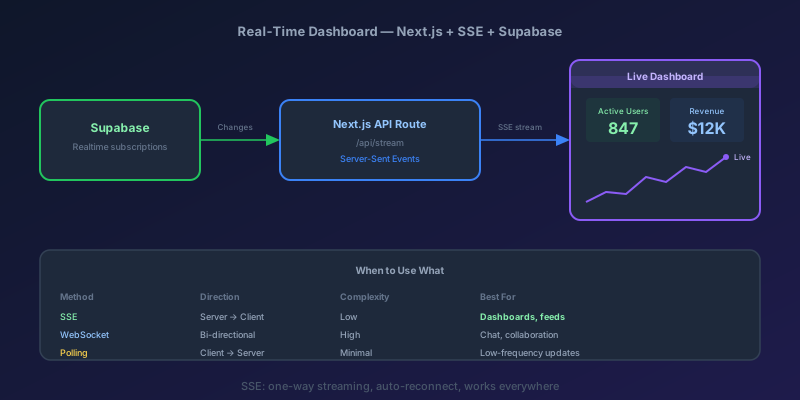
Building a Real-Time Dashboard with Next.js, Server-Sent Events, and Supabase
A step-by-step guide to building a live-updating dashboard using Next.js API routes, Server-Sent Events, and Supabase Realtime — with reconnection handling and smooth UI transitions.
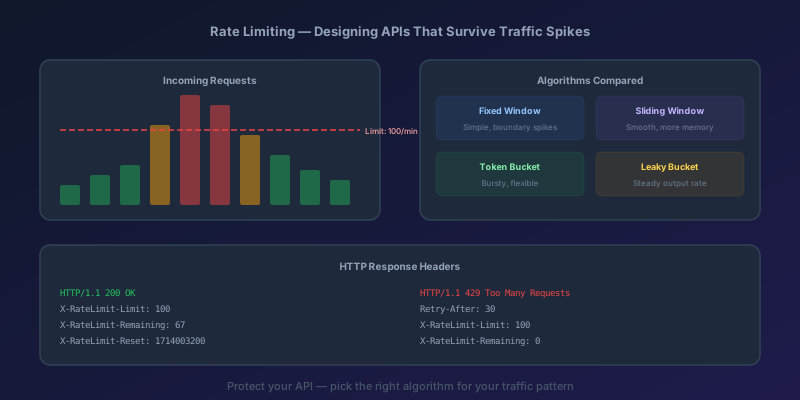
Rate Limiting and Throttling: Designing APIs That Survive Traffic Spikes
Why every public API needs rate limiting, the four main algorithms compared, implementation in Next.js with Redis, proper HTTP headers, and Azure API Management policies.
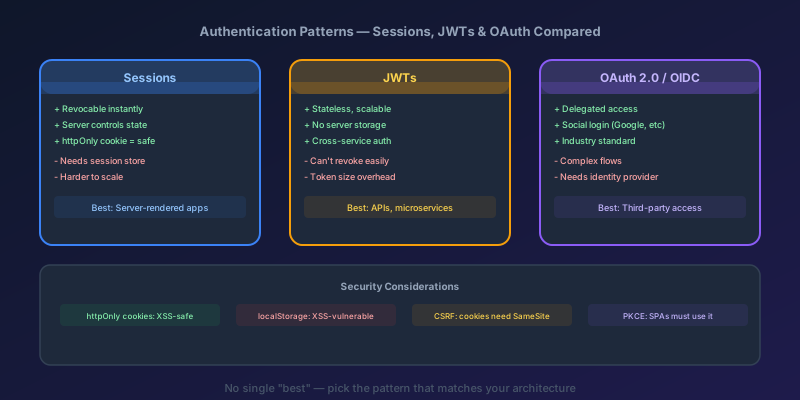
Authentication Patterns for Modern Web Apps: Sessions, JWTs, and OAuth Compared
A practical comparison of session-based auth, JWT auth, and OAuth 2.0 / OIDC — how each works, when to use them, security pitfalls, and recommended patterns for SPAs, server apps, and mobile.
Newsletter
New posts, straight to your inbox
One email per post. No spam, no tracking pixels, unsubscribe anytime.
Comments
No comments yet. Be the first.